
News


Coaching
Préparation mentale : Le secret pour exceller sur le point universe // Mental preparation: The secret to excellence during universe point
*English below
Le Secret pour Exceller sur le Point Universe
Pourquoi un point universe est-il différent des autres points ?Parce que l’enjeu est élevé.
Un point universe nous offre une rétroaction immédiate de la qualité de notre performance. Le temps ralentit ou s’accélère, tu deviens beaucoup plus conscient(e) de tes pensées, de tes émotions et de ce qui se passe dans ton environnement. L’erreur est multipliée par dix, et chaque instant, chaque action, chaque décision compte.
Le facteur qui cause 90% des erreurs dans les moments critiques
La plupart du temps, les erreurs sont causées par un manque de concentration.
Ton cerveau a la capacité extraordinaire de voyager dans le temps. Il peut diriger son attention vers le passé, le présent ou le futur.
Voyager dans le passé est utile pour en tirer des leçons qui servent à notre progression et à notre évolution.
Voyager dans le futur est utile pour créer notre vision, établir nos buts et nos intentions, et élaborer des stratégies pour les concrétiser.
Dans un monde idéal, ces voyages ont lieu lors de moments spécifiquement dédiés à la réflexion et à l’analyse. Lorsqu’il est temps de performer sur le terrain, il est beaucoup plus efficace de rester dans le moment présent, puisque toute l’information dont nous avons besoin pour agir et prendre les décisions appropriées s’y trouve : nos sensations et émotions, ainsi que les informations visuelles, auditives et sensorielles fournies par notre environnement. Le moment présent est aussi le fuseau horaire sur lequel nous avons du contrôle, c’est-à-dire que nous ne pouvons changer le passé, et le seul moyen d’agir sur notre futur est de s’impliquer pleinement, d’agir et de prendre des décisions dans le moment présent.
Toutefois, en sport, nous sommes devenus tellement habiles à voyager dans le temps que nous le faisons à tout moment, parfois de façon inconsciente et très souvent de manière incontrôlée.
Certains athlètes voyagent plus naturellement vers le passé et d’autres vers le futur. Qu’en est-il pour toi ? As-tu tendance à revoir mentalement tes erreurs en boucle sans arriver à lâcher prise et tourner la page ? As-tu tendance à imaginer les conséquences catastrophiques d’une défaite ou à rêver de la médaille pendant ta performance ?
3 attitudes à adopter pour réduire ton stress en compétition
Dans les moments importants, comme un point universe, ton stress est causé par le doute et la peur de ne pas arriver à répondre aux attentes, que ce soit les tiennes ou celles des autres.
« Je ne dois surtout pas être celui/celle qui va échapper le disque. »« Je ne peux pas laisser tomber mes coéquipiers/ères ! »« Je dois créer un revirement en défensive, c’est pour ça que j’ai été appelé(e) sur le terrain. »« Je suis capitaine, je dois faire mener mon équipe à la victoire. »
Qu’est-ce qui, selon toi, cause cette pression sur tes épaules ?
Les jugements que tu portes sur tes actions et leur résultat.
Lorsque tu deviens frustré(e) suite à une erreur, c’est parce que tu considères que faire une erreur, c’est quelque chose de négatif. Tu as énoncé une attente, celle de ne pas faire d’erreur. Puis, suite à ton erreur, tu as porté un jugement : ce n’est pas bien. (clique ici pour lire mon article à propos du jugement)
Mais si tu ne commettais jamais d’erreur, tu ne pourrais être témoin de ta progression. Il te serait impossible de te donner des objectifs et des buts et surtout, de savourer le plaisir de les atteindre. Tu ne pourrais ressentir le sentiment d’accomplissement lié à tes succès.
Le sport, c’est un cheminement continu vers la découverte et le dépassement de soi.
La compétition, c’est un moyen et non une fin.
Un moyen d’évoluer.Un moyen de te regarder en face et de prendre conscience de qui tu es réellement.Un moyen de découvrir et de faire tomber les barrières que tu élèves autour de toi.Un moyen d’aller au-delà de ta zone de confort et de transcender tes limites.
En tant qu’athlète, on perçoit souvent le match, le tournoi, la finale de championnat comme une finalité. Comme si c’était notre seule et unique chance de prouver au monde et/ou de se prouver à soi-même qu’on pouvait le faire. Un match, c’est une opportunité de faire un pas dans la direction choisie. Et chaque défaite, chaque erreur nous donne un indice sur la direction à prendre pour le pas suivant.
Lorsque tu vois chaque match comme faisant partie d’un long cheminement que l’on appelle la vie, alors tu cesses de porter des jugements sur chacune de tes actions, tes décisions. Tu observes chaque épreuve, chaque erreur pour comprendre ce qu’elle veut t’enseigner. Tu détermines ce que tu veux accomplir, tu cultives la patience, et tu cesses d’avoir des attentes à court terme, ou de t’imposer le succès immédiat, comme gagner ou être parfait(e).
Voici 3 attitudes à adopter pour te libérer du stress, du doute et de la peur dans les moments critiques :
Développe une pratique basée sur la patience et non le jugement ;
Prends conscience de l’importance de commettre des erreurs pour progresser ;
Vois le résultat comme un indice de la direction à prendre, et non un indice de ta valeur.
Le secret pour exceller sur le point universe
Il y a quelque temps, j’ai entendu cette expression, qui a ouvert pour moi de nouveaux horizons :
Be a Dot.(Sois un point.)
Qu’est-ce que ça veut dire ?
Imagine que tu dessines les uns à côté des autres une centaine de points, qu’obtiens-tu ?
Une ligne :
. . . . . . . . . . . . . .
Sur cette ligne, chacun des points est indépendant du précédent et du suivant. Si je dessine un point plus gros que les autres, plus haut ou plus bas, le point suivant n’en sera pas affecté.
Maintenant, imagine que tu dessines une ligne de temps à l’aide de points, et que tu inclus le passé, le présent et le futur :
Le point au centre de la loupe, c’est ton moment présent. C’est là où tu te trouves lors du point universe. Ce point est complètement indépendant du passé et du futur.
Quand tu débutes ton point universe, tout va bien. Tu es en pleine possession de tes moyens. Mais lorsque tu te connectes à un point dans le passé (c’est le joueur que je couvrais qui a marqué le point, ce joueur est vraiment trop rapide pour moi) ou à un point dans le futur (qu’est-ce que les autres vont penser si je commets une nouvelle erreur), tu ouvres la porte au doute et tu réduis ainsi tes chances de performer à ton plein potentiel.
Le jugement que tu portes sur tes performances passées (j’ai raté mon lancer sur le dernier point, je suis vraiment mauvais(e) sous la pression), tes attentes et le résultat que tu crois devoir absolument obtenir dans le futur (il faut gagner ce match, on ne peut pas perdre contre cette équipe), créent des pensées et des émotions qui pourraient te déconcentrer pendant ton point universe.
Be a dot.Sois un point.
L’instant présent est un simple point. Il n’a besoin ni des points précédents, ni des points suivants pour exister. Les doutes, les pensées négatives et les émotions surgissent quand tu connectes les points et que tu formes un jugement par rapport à cette connexion. Lorsque tu vis chaque instant sans peur du futur, sans jugement par rapport au passé, c’est alors que tu donnes le meilleur de toi-même dans les moments critiques.
Pourquoi le point universe est-il différent des autres points ?
Au début de cet article, j’ai affirmé que c’était parce que l’enjeu était élevé. Ce n’est pas tout à fait exact. Je crois plutôt que c’est parce que nous choisissons de percevoir l’enjeu comme étant élevé.
Deviens un point. Vis ton match un point à la fois, un instant à la fois. Rappelle-toi que chaque point du passé t’a permis d’arriver au point présent, et que chaque instant est un nouveau départ, une nouvelle opportunité de grandir et d’avancer vers tes buts.
Pour d’autres trucs, visite mon blogue, télécharge mon ebook gratuit les 3 étapes pour entrer dans la zone, et profite de ma promotion (30% de rabais) sur la formation en ligne impACT Saison !
Bonne réflexion,
Bio : Le sport est un outil extraordinaire pour développer ton potentiel sportif et humain. Je m'appelle Guylaine Girard et j’évolue dans le sport de l’ultimate depuis 12 ans. Entraîneur-chef du Royal (AUDL) en 2016, j’ai aussi entraîné de nombreuses équipes dans les catégories junior, open et women. Depuis 25 ans, j’aide les athlètes et les entraîneurs passionnés et dédiés à développer leur ténacité mentale et leur leadership, afin qu’ils puissent aller au bout de leurs rêves. Ma vraie passion, c’est d’amener les gens à prendre conscience de ce qui les bloque dans la réalisation de leurs buts pour ensuite leur donner des outils pratiques et efficaces pour avancer.
*English
The secret to excellence during universe point
Why is a universe point different from other points?Because the stakes are higher.
A universe point offers us immediate feedback on the quality of our performance. Time slows down or accelerates, you become much more aware of your thoughts, emotions and what is happening in your environment. A mistake is multiplied by ten, and every moment, every action, every decision counts.
The factor that causes 90% of mistakes at critical moments
Most of the time, mistakes are caused by a lack of concentration.
Your brain has the extraordinary ability to travel back through time. It can direct its attention to the past, present, or future.
Travelling back to the past is useful to learn lessons that are relevant to our progress and evolution.
Travelling into the future is useful in creating our vision, setting our goals and intentions, and developing strategies to achieve them.
In an ideal world, these trips take place during times specifically dedicated to reflection and analysis. When it's time to perform on the field, it's much more effective to stay in the present moment, since all the information we need to act and make appropriate decisions is there: our feelings and emotions, and as the visual, auditory and sensory information provided by our environment. The present moment is also the “time zone” over which we have control. We cannot change the past, and the only way to act on our future is to be fully involved, to act and to make decisions in the present moment.
However, in sport, we have become so skilled at time travel that we do it at any time, sometimes unconsciously and very often in an uncontrolled way..
Some athletes travel more naturally to the past and others to the future. What about you? Do you tend to mentally review your mistakes over and over again without being able to let go? Do you tend to imagine the catastrophic consequences of a defeat or to dream of a medal during your performance?
3 attitudes to adopt to reduce your stress in competition
In important moments, such as a universe point, your stress is caused by doubt and fear of not being able to meet expectations, whether yours or those of others.
"I must not be the one who will drop the disc.""I cannot let my teammates down!""I have to get the D, that's why I was called on the field.""I am a captain; I have to lead my team to victory."
What do you think is causing this pressure on your shoulders?
The judgments you make about your actions and their results.
When you become frustrated because of a mistake, it is because you think that making a mistake is a negative thing. You stated an expectation, that of not making mistakes. Then, following your mistake, you made a judgment: it's bad. (click here to read my article about judgment)
But if you never made a mistake, you could not witness your progress. It would be impossible for you to set goals and objectives and, above all, to savor the pleasure of achieving them. You could not feel the sense of accomplishment associated with your success.
Sport is a continuous journey towards discovery and surpassing oneself.
Competition is a means, not an end.
It helps us evolve in sport and in life.It makes us look ourselves in the face and become aware of who we really are.It helps us discovering and breaking down the barriers we are building around us.It pushes us beyond our comfort zone so we can transcend our limits.
As an athlete, we often perceive the match, the tournament, the championship final as an end in itself. As if it was our one and only chance to prove to the world and / or prove to ourselves that we could do it. A match is an opportunity to take a step in the chosen direction. Every defeat, every mistake gives us an indication on the direction to take for the next step.
When you see each game as part of a long journey called life, then you stop making judgments about each of your actions, your decisions. You observe every obstacle, every mistake to understand what it wants to teach you. You determine what you want to accomplish, you cultivate patience, and you stop having short-term expectations, or imposing immediate success on yourself, such as winning or being perfect.
Here are 3 attitudes to adopt to free yourself from stress, doubt and fear at critical moments:
Develop a practice based on patience and non-judgment;
Be aware of the importance of making mistakes to progress;
Think of the result as an indication of the direction to take, not an indication of your value.
The secret to excellence during universe point
Some time ago, I heard this expression, which opened up new horizons for me:
Be a Dot.
What does that mean?
Imagine that you draw a hundred dots next to each other, what do you get?
A line :
. . . . . . . . . . . . . .
On this line, each dot is independent of the previous and the next. If I draw a dot larger than the others, higher or lower, the next dot will not be affected.
Now, imagine that you draw a timeline using dots, and that you include the past, present, and future:
The dot in the center of the magnifying glass is your present moment. This is where you are now, at the universe point. This dot is completely independent of the past and the future.
When you start your universe point, everything is fine. You are in full command of your abilities. But when you connect to a dot in the past (the player I was covering scored the point, that player is really too fast for me) or to a dot in the future (what will others think if I make another mistake), you open the door to doubt and you reduce your chances of performing to your full potential.
When you judge your past performances (I missed my throw on the last point, I'm really bad under pressure), your expectations, and the result you think you absolutely must get in the future (I have to win this game, we cannot lose against this team), you create thoughts and emotions that could distract you during your universe point.
Be a dot.
The present moment is a simple dot. It does not need either the preceding dots nor the following dots to exist. Doubts, negative thoughts, and emotions arise when you connect the dots and form a judgment about that connection. When you live every moment without fear of the future, without judgment about the past, it is then that you give the best of yourself in critical moments.
Why is a universe point different from other points?
At the beginning of this article, I said that it was because the stakes were high. That is not quite true. Rather, I believe it's because we choose to perceive a high stake in this situation.
Become a dot. Live your game one dot at a time, one moment at a time. Remember that each dot in the past has allowed you to reach the present dot, and that each moment is a new beginning, a new opportunity to grow and advance towards your goals.
For more tips, visit my blog and download my free ebook for coaches!
Bio: My name is Guylaine Girard and as a coach and mental trainer, I believe that sport is an extraordinary tool to inspire greatness, not only in athletes but also in human beings. In my work, I always want to empower people, because I know that once you have taken control of your life, your performance can skyrocket. I have been involved in the sport of ultimate for 12 years. Head Coach of the Royal (AUDL) in 2016, I also coached many teams in the junior, open and women streams. For 25 years, I have been helping passionate and dedicated athletes and coaches develop their mental tenacity and leadership so that they can achieve their dreams. My real passion is to make people aware of what is blocking them in achieving their goals and then give them practical and effective tools to move forward.
Coaching
Rewriting The Script: Staying Focused After Early Injury
In the face of adversity and injury, here's how Kellan Gibboney is keeping their head held high.

Coaching
Préparation mentale : 3 clés pour bâtir rapidement ta confiance sur le terrain // Mental preparation: 3 steps to quickly build your confidence on the field
*English below
Juste avant un match important, t’arrive-t-il de te sentir stressé(e) et d’avoir peur de ne pas performer à la hauteur de tes attentes ou de celles des autres?
T’arrive-t-il de douter de tes capacités?
Voici un truc efficace pour développer une confiance à toute épreuve, à l’entraînement et en match.
Deux types de réaction face à la performance
Lorsque tu exécutes une action, que ce soit un lancer, un tracé (cut), une marque ou une couverture défensive, pendant ou après cette action tu peux réagir de deux façons :
Tu peux émettre un jugement ;
ou tu peux émettre un commentaire.
Tu émets un jugement (aussi appelé jugement de valeur) lorsque tu exprimes ton opinion par rapport à ta performance. Tu affirmes que ton action est bonne, ou mauvaise, ou préférable à une autre. Un jugement est subjectif et porte sur le bon ou le mauvais.
Par exemple, après un lancer tu pourrais juger qu’il n’était pas bon. Tu pourrais renchérir en affirmant que tes longues passes (hucks) sont mauvaises aujourd’hui. Tu exprimes alors ton opinion.
Tu émets un commentaire (aussi appelé jugement de fait) lorsque tu observes ce qui se passe, pour ensuite décrire une réalité objective qui ne dépend pas de l’opinion de chacun. Un commentaire est objectif et porte sur le vrai et le faux.
Par exemple, après un lancer tu pourrais te dire que le disque a volé au-dessus de la cible et qu’il il a touché le sol à l’extérieur des limites du terrain. Tu exprimes alors des faits.
Lorsque tu analyses ta performance, quel type de réaction adoptes-tu le plus souvent? As-tu plutôt tendance à émettre des jugements ou des commentaires?
"Confidence really comes from what we say to ourselves.”
"La confiance provident de la manière dont nous nous adressons à nous-même.”Michael Gervais, préparateur mental des Seahawks de Seattle
Jugement et commentaire : les effets sur ta performance
Un jugement, particulièrement lorsqu’il est négatif, ouvre la porte aux émotions et peut affecter ta confiance. Lorsque tu affirmes que ton action n’est pas bonne, tu attribues une valeur négative à ton action. Il est possible que tu te sentes alors frustré(e) ou stressé(e) et ta confiance diminue progressivement. Avec le temps, tes jugements visent de moins en moins ta performance pour viser de plus en plus ta personne, en tant qu’athlète puis en tant qu’être humain.
Mon lancer n’était pas bon…
Mes longues passes sont mauvaises aujourd’hui…
Je suis nul(le) pour lancer des longues passes…
Je suis un(e) mauvais lanceur(se)…
Je manque de talent…
Je n’arriverai jamais à rien…
Un commentaire est neutre. Il ouvre la porte à la réflexion et à la recherche de solutions. Lorsque tu te places en position d’observateur, cela te permet d’analyser plus clairement ce qui s’est passé et d’élaborer un plan d’action pour obtenir un résultat différent – si le résultat obtenu n’est pas celui attendu. Après avoir formulé des hypothèses et trouvé des pistes de solution, tu te sens plus confiant(e) et tu as hâte de répéter l’expérience pour poursuivre ton exploration.
Le disque est passé au-dessus de ma cible et il est sorti à l’extérieur des limites du terrain.
Pourquoi le disque était-il haut dans les airs et hors-limites?
Un vent latéral a soulevé le disque et l’a fait dévier de sa trajectoire.
Lorsque je lancerai à nouveau dans cette direction, j’inclinerai davantage mon disque face au vent de manière à lui faire faire une courbe intérieure.
Pourquoi pratiques-tu ton sport?
Les athlètes qui considèrent leur sport comme un moyen de gagner le respect, la confiance, la reconnaissance ou l’admiration ont davantage tendance à émettre des jugements à propos de leur performance et de celles de leurs coéquipiers(ères). Chaque action est perçue comme une opportunité de se faire valoir, à leurs propres yeux ou aux yeux des autres.
Si tu t’exprimes souvent en émettant des jugements, il est possible que tu aies tendance à ressentir l’urgence d’être parfait(e) maintenant. Tu veux des résultats immédiats et les actions qui ne produisent pas le résultat escompté affectent souvent ta confiance. Tu te sens rapidement envahi(e) par le stress, la frustration, l’embarras ou la peur et il devient difficile pour toi de discerner ce que tu peux faire pour t’améliorer.
Les athlètes qui considèrent leur sport comme un processus d’apprentissage continu et un cheminement vers une plus grande maîtrise ont davantage tendance à émettre des commentaires dans toute situation, peu importe l’enjeu. Chaque action et son résultat sont perçus comme des opportunités de perfectionnement.
Si tu t’exprimes souvent en émettant des commentaires, il est possible que tu aies tendance à être plutôt patient(e) et tolérant(e) envers toi-même et les autres. Tu es probablement curieux(se) de nature et ouvert(e) aux commentaires d’autrui, et ton niveau de confiance est généralement plus stable, à l’entraînement et en compétition. Tu t’interroges régulièrement et tu cherches toujours des occasions de t’améliorer.
Deviens commentateur(trice) de ta performance
Le rôle d’un commentateur est d’observer la performance et de la décrire, sans prendre parti pour un athlète ou pour une équipe. Pour pratiquer le non jugement face à tes actions, et ainsi accélérer ta progression et bâtir ta confiance sur le terrain, un truc efficace est de devenir commentateur(trice) de ta propre performance!
Voici 3 conseils pour y arriver :
Deviens curieux(se). Quand tu exécutes une action, au lieu de décider si c’est bon ou mauvais, concentre-toi sur les FAITS. Qu’est-ce que tu as vu, entendu et/ou ressenti? Quel est le résultat obtenu? Est-ce celui auquel tu t’attendais? Si la réponse est non, que pourrais-tu faire différemment? Lorsque tu te poses ces questions, porte attention à tes émotions, respire et cherche à te focaliser sur les solutions. Plus tu resteras calme, plus tu arriveras à clarifier tes intentions. Ton corps se synchronisera alors plus facilement et rapidement pour te donner ce que tu veux.
Entraîne ta capacité à sentir tes actions. En tout temps, porte attention au positionnement de ton corps, à tes muscles en action et à tes sensations physiques. Une conscience de ton corps plus aiguisée t’aidera à analyser tes actions et tu deviendras plus habile à apporter des ajustements.
Élargis ton champ de connaissances. Quelles sont les différentes actions possibles pour abaisser la hauteur d’un lancer? Quels sont les différents trucs qui permettent de se déplacer rapidement dans une marque? Quelles sont les habiletés physiques requises pour une couverture défensive personne à personne serrée? Plus tu connais ton sport, plus il est facile de répondre à ces questions. Tu trouves ainsi des solutions plus rapidement, sans avoir à recourir constamment à ton entraîneur.
Confiance : prends la voie rapide
Puisque le jugement implique le positif et le négatif, il entraîne des émotions, positives ou négatives. Lorsque tu juges tes actions, tu te concentres sur le résultat immédiat et tu laisses passer une opportunité d’apprendre. Même une victoire peut nous enseigner une leçon! Plus tu te juges (et plus tu juges les autres), plus tu ralentis ta progression.
Lorsque tu commentes, tu observes tes actions (et celles des autres) en impliquant tes trois sens principaux en sport : vue, ouïe et sensations physiques. Les commentaires te poussent à développer ta curiosité et ton sens de l’observation. En te focalisant sur les faits, tu entraînes ton sens de l’analyse et tu stimules ensuite ta créativité dans la recherche active de solutions. Tu accélères alors ta progression, en plus de développer une solide confiance en tes capacités!
Pour d’autres trucs, visite mon blogue et télécharge mes ebooks gratuits :
Athlètes : les 3 étapes pour entrer dans la zone
Entraîneurs : la formule gagnante pour inspirer tes athlètes
Bon début de saison!
Groupe Facebook Athlètes
Groupe Facebook Entraîneurs
Bio : Le sport est un outil extraordinaire pour développer ton potentiel sportif et humain. Je m'appelle Guylaine Girard et j’évolue dans le sport de l’ultimate depuis 12 ans. Entraîneur-chef du Royal (AUDL) en 2016, j’ai aussi entraîné de nombreuses équipes dans les catégories junior, open et women. Depuis 25 ans, j’aide les athlètes et les entraîneurs passionnés et dédiés à développer leur ténacité mentale et leur leadership, afin qu’ils puissent aller au bout de leurs rêves. Ma vraie passion, c’est d’amener les gens à prendre conscience de ce qui les bloque dans la réalisation de leurs buts pour ensuite leur donner des outils pratiques et efficaces pour avancer.
______________________________________
*English
Just before an important game, do you ever feel stressed and afraid that you won't perform as well as you or others expected?
Do you ever doubt your abilities?
Here's an effective way to build confidence in any event, in training and in games.
Two types of reaction to performance
When you perform an action, whether it is a throw, a cut, a mark or a defensive cover, during or after this action you can react in two ways:
You can make a judgment;
or you can make a comment..
You make a judgment (also called a value judgment) when you express your opinion about your performance. You say your action is good, or bad, or better than any other. A judgment is subjective and focuses on the good or bad.
For example, after a throw you might judge it not to be good. You could add to that by saying that your long hucks are bad today. You then express your opinion.
You make a comment (also called a factual judgment) when you observe what is happening, and then describe an objective reality that does not depend on anyone's opinion. A comment is objective and focuses on the true and the false.
For example, after a throw you might think that the disc flew over the target and hit the ground outside the boundaries of the field. You then express facts.
When you analyze your performance, what type of reaction do you most often use? Do you tend to make judgments or comments?
"Confidence really comes from what we say to ourselves.”
Michael Gervais, Seattle Seahawks mental coach
Judgment and comment: impacts on your performance
A judgment, especially when it is negative, opens the door to emotions and can affect your confidence. When you say that your action is not good, you attribute a negative value to your action. You may feel frustrated or stressed and your confidence gradually decreases. Over time, your judgments are less and less about your performance and more about yourself, as an athlete and then as a human being.
My throw was not good...
My long passes are bad today...
I'm not good at throwing long passes...
I am a bad pitcher...
I lack talent...
I'll never get anywhere...
A comment is neutral. It opens the door to reflection and the search for solutions. When you put yourself in an observer position, it allows you to analyze more clearly what happened and develop an action plan to achieve a different result - if the result achieved is not the one expected. After making hypotheses and finding solutions, you feel more confident and look forward to repeating the experience to continue your exploration.
The disc passed over my target and went out outside the boundaries of the field.
Why was the disc high in the air and off-limits?
A crosswind lifted the disc and caused it to deviate from its trajectory.
When I throw again in this direction, I will tilt my disc further into the wind so that it makes an inside curve.
Why do you practice your sport?
Athletes who view their sport as a means of gaining respect, trust, recognition or admiration are more likely to make judgments about their performance and that of their teammates. Each action is perceived as an opportunity to make a difference, either in their own eyes or in the eyes of others.
If you often express yourself by making judgments, you may tend to feel the urgency to be perfect now. You want immediate results and actions that do not produce the expected result often affect your confidence. You quickly feel overwhelmed by stress, frustration, embarrassment or fear and it becomes difficult for you to discern what you can do to improve.
Athletes who view their sport as a continuous learning process and a path to greater mastery are more likely to comment in any situation, regardless of the issue. Each action and its result are perceived as opportunities for improvement.
If you often express yourself by making comments, you may tend to be rather patient and tolerant towards yourself and others. You are probably curious by nature and open to comments from others, and your confidence level is generally more stable in training and competition. You regularly ask yourself questions and are always looking for opportunities to improve.
Become a commentator on your performance
The role of a commentator is to observe and describe performance, without taking sides with an athlete or team. To practice non-judgment in front of your actions, and thus accelerate your progress and build your confidence on the field, an effective trick is to become a commentator on your own performance!
Here are 3 tips to get there:
Become curious. When you perform an action, instead of deciding whether it is good or bad, focus on the FACTS. What did you see, hear and/or feel? What is the result obtained? Is it the one you expected? If the answer is no, what could you do differently? When you ask yourself these questions, pay attention to your emotions, breathe, and try to focus on solutions. The calmer you stay, the more you will be able to clarify your intentions. Your body will then synchronize more easily and quickly to give you what you want.
Train your ability to feel your actions. At all times, pay attention to your body positioning, your muscles in action and your physical sensations. A sharper awareness of your body will help you analyze your actions and you will become more skilled at making adjustments.
Expand your knowledge base. What are the different possible actions to lower the height of a throw? What are the different tricks that allow you to move quickly when handling? What are the physical skills required for a tight person-to-person defensive mark? The more you know about your sport, the easier it is to answer these questions. This way you find solutions faster, without having to constantly resort to your trainer.
Confidence: take the fast track
Since judgment involves both the positive and the negative, it leads to emotions, positive or negative. When you judge your actions, you focus on the immediate result and miss an opportunity to learn. Even a victory can teach us a lesson! The more you judge yourself (and the more you judge others), the more you slow down your progress.
When you comment, you observe your actions (and those of others) by involving your three main senses in sport: sight, hearing and physical sensations. Comments encourage you to develop your curiosity and observation skills. By focusing on the facts, you train your analytical skills and then stimulate your creativity in the active search for solutions. You then accelerate your progress, in addition to developing a solid confidence in your abilities!
For more tips, visit my blog and download my free ebooks:
Athletes: les 3 étapes pour entrer dans la zone
Coaches: the winning formula to inspire your athletes
Wishing you a strong start to your season!
Athletes Facebook Group
Coaches Facebook Group
Bio: Sport is an extraordinary tool to develop your sporting and human potential. My name is Guylaine Girard and I have been involved in the sport of ultimate for 12 years. Head Coach of the Royal (AUDL) in 2016, I also coached many teams in the junior, open and women streams. For 25 years, I have been helping passionate and dedicated athletes and coaches develop their mental tenacity and leadership so that they can achieve their dreams. My real passion is to make people aware of what is blocking them in achieving their goals and then give them practical and effective tools to move forward.

Coaching
Cold Weather Tips
Don't let the cold stop you from being #OnlyTheBest. Check out our cold weather ultimate tips we've picked up over the years!
Coaching
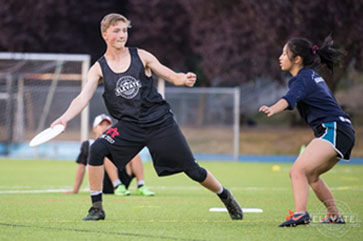
Partnership Announcement: Elevate Ultimate Academy
Meet the amazing organization from Vancouver!

Coaching
#TravelTuesday: Jacob Price-Ahmedabad, India
Read about Jacob's amazing experience sharing ultimate in India.

Coaching
TCWG 2017: Team Canada & Mental Toughness
In the following article, TCWG player Laura Mason discusses mental toughness and its importance in training.

Coaching
Midwest Throwdown: Without Limits Ultimate Event
This year, Wash U Women's Ultimate and Without Limits celebrated the 10 year anniversary of Midwest Throwdown, hosting 72 teams in Columbia, MO. Looking across the vast expanse of fields, it was hard to believe that the tournament started with only 13 teams.
Purdue won the Open Division of the tournament, while Iowa State won the Women's Division. Congratulations to both teams, who took home Spikeball sets to celebrate their victories!
TD Devin Ryan felt that host team Wash U learned a lot from running the tournament. "We learned how much planning goes into running a tournament, and how there’s so much going on behind-the-scenes that the average player doesn’t have to think about. It’s incredible to have this opportunity to have so much control over how the tournament is run and it’s great having that sense of accountability and then reward when the tournament is over."
She also had positive comments about VC's presence at the tournament, "VC has been nothing but supportive of our team, and they were especially helpful of us both throughout the merchandise design process and managing the complex logistics of hosting such a big tournament. We loved how they valued our input when making any decision, and worked with our team every step of the way."
Host team Wash U has been a valued VC partner team for a number of years. Captains Nora and X had this to say about the partnership, "VC has always been attentive to our needs and supported us in getting all of the gear that we need. VC is responsive, communicative, and a great company to work with because of their attention to detail and desire to make gear that fits our team's needs."The Wash U captains' favorite part about Throwdown was the Skills Clinic at the end of Saturday. The captains said, "It's very fulfilling to be able to give women in ultimate the opportunity to expand their skill sets with talented coaches - and to be able to take part in those opportunities ourselves!" VC is happy to support the Skills Clinic, Throwdown, and Wash U Women's Ultimate.
To learn more about this and other Without Limits Ultimate events, please visit their site here!
Invalid password
Enter